Short answer
A fractional CMO buys senior judgement and ownership part time. A GTM consultant buys a defined project, such as an ICP, a pricing review or an outbound build. An agency buys execution capacity in one or two channels. A first marketing hire buys a permanent owner. Before $1M in revenue, most startups need a consultant or a delivery partner, not a full-time hire; after the motion repeats, hire the permanent owner.
On this page
Founders often compare these four options on price. Price matters, but the bigger mistake is buying the wrong kind of help. A plan does not book meetings, and an agency does not decide who you should sell to.
Each option buys something different
The four options are not substitutes. Each one buys a different thing, and each fails in a predictable way.
| Option | What you are buying | Typical cost | Fails when |
|---|---|---|---|
| Fractional CMO | Senior judgement and ownership, part time | $5,000 to $15,000 a month | Nobody does the hands-on work |
| GTM consultant | A defined project with a deliverable | Fixed fee per project | The plan is never put into practice |
| Agency | Execution in one or two channels | Monthly retainer | Strategy is unclear, so output has no target |
| First marketing hire | A permanent owner | Salary plus 30% to 50% for taxes, benefits and tools | Hired before the working channel is known |
The fractional CMO range is from a survey of 250 fractional professionals. The hire’s overhead uses AgencyPro’s estimate that total employee cost runs 1.3 to 1.5 times base salary (summary, GTM 80/20).
See what each option looks like in a normal week
The table hides how different these options feel day to day. A typical week shows where your time goes in each case.
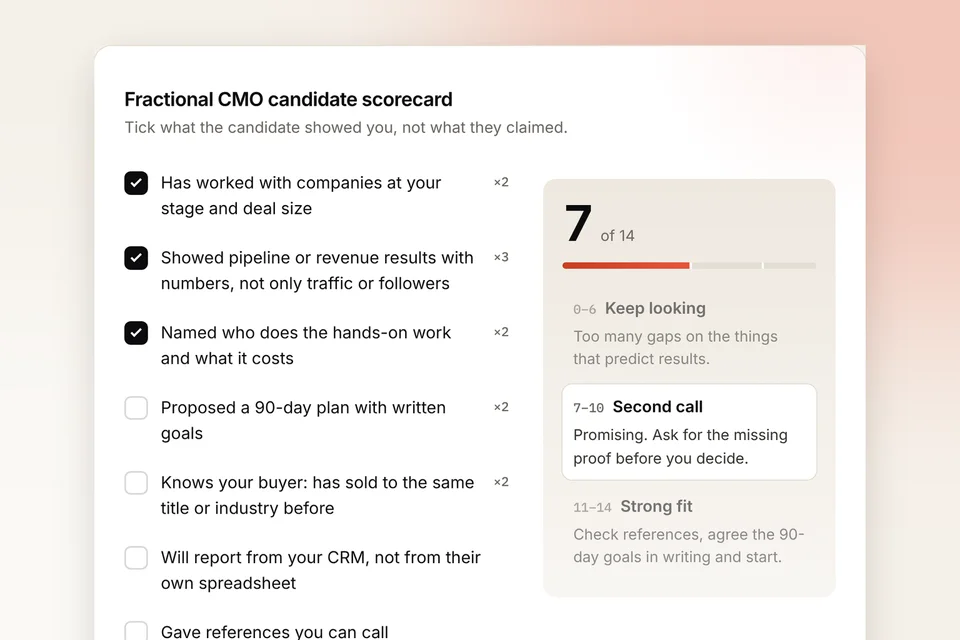
Fractional CMO. One or two calls with the founder, a weekly review of the numbers, and decisions on budget and channel. The leader manages the people who execute. Your time goes on approvals and on the calls where they need your judgement.
GTM consultant. Workshops and interviews early on, then a deliverable: an ICP document, a pricing recommendation, a CRM setup or an outbound playbook. When the project ends, your team runs it. Your time goes on the workshops and on putting the result into practice.
Agency. A weekly report and a regular call. The agency produces the posts, ads or emails it was hired for. Your time goes on briefing, reviewing work and making sure it matches what sales hears from buyers.
First marketing hire. A full-time person in your team meetings, owning the plan and doing much of the work. Your time goes on management, especially in the first three months.
Match the option to your stage
Stage matters more than budget. The same option that works at $3M in revenue wastes money at $200K. Choose the stage closest to yours.
The founder owns go-to-market, with a consultant for specific gaps
Before about 10 customers, the work is discovery: learning who buys and why. That cannot be handed over. Bring in a consultant for a defined job, such as building the first account list or setting up the CRM.
- Buy projects, not retainers
- Keep every sales call with the founder
- Spend on the list and the tools before spending on people
Avoid a full-time marketing hire and a broad agency retainer at this stage.
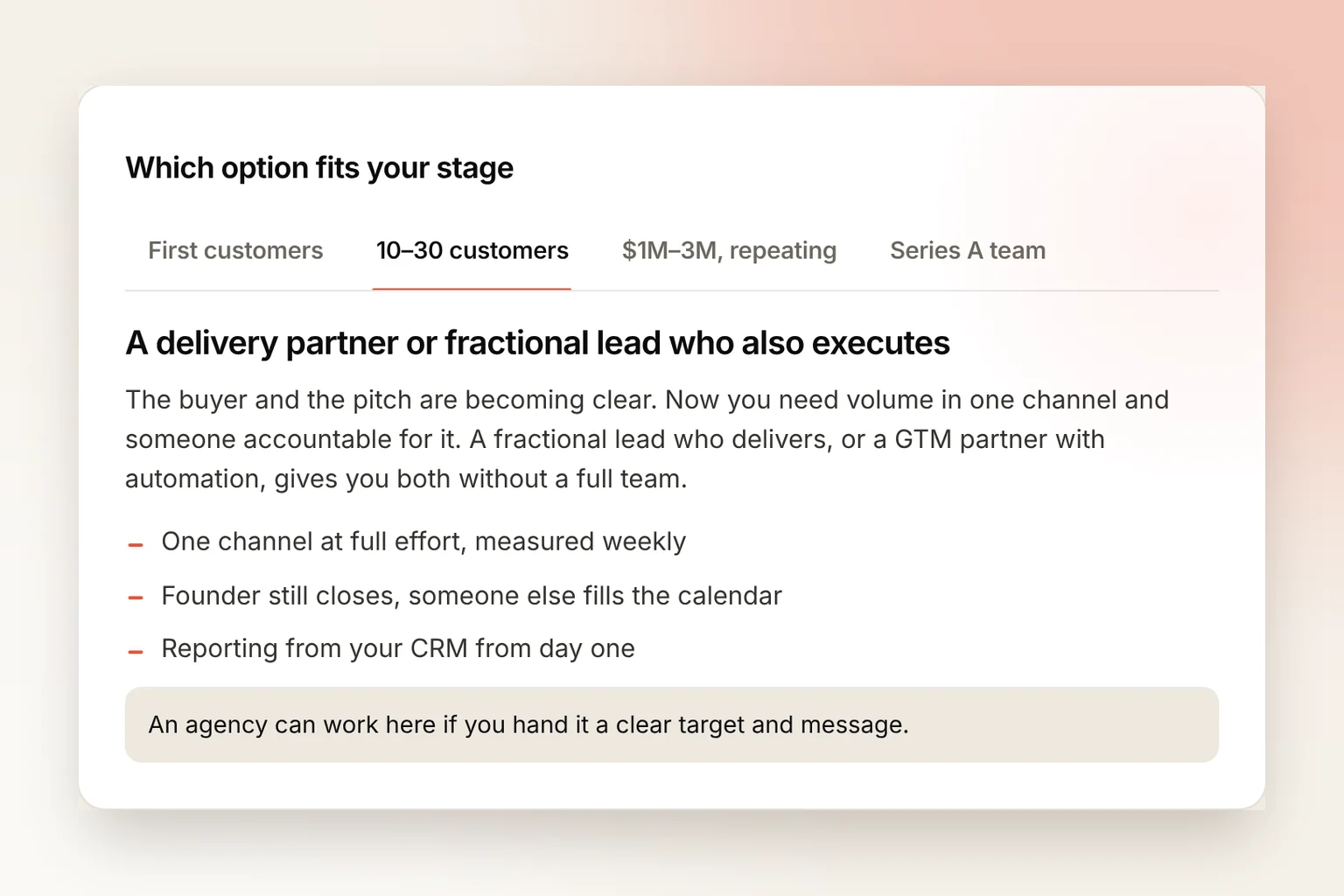
A delivery partner or fractional lead who also executes
The buyer and the pitch are becoming clear. Now you need volume in one channel and someone accountable for it. A fractional lead who delivers, or a GTM partner with automation, gives you both without a full team.
- One channel at full effort, measured weekly
- Founder still closes, someone else fills the calendar
- Reporting from your CRM from day one
An agency can work here if you hand it a clear target and message.
Hire the first permanent owner, keep outside help for specialist work
Meetings arrive every week from the same profile and message. That is the signal to hire a full-time owner and give them the playbook. Keep partners for the specialist parts: outbound infrastructure, paid media, content production.
- Hire someone who has run the channel that already works
- Hand over a written playbook, not a blank page
- Keep the founder on the biggest deals
A fractional CMO can mentor the first hire for a quarter.
A full team, or an integrated GTM operating system
At this point you need sales, marketing and RevOps working as one system. You can hire each role or bring in a partner that runs them together under one lead while you hire.
- Sales, marketing and RevOps report into one plan
- Agents and automation take over repeat work
- Hires join a running system, not an empty one
This is the stage the GTM Operating System is built for.
Price the total, not the retainer
A low retainer can hide a large total. If a fractional CMO needs an agency to execute, you are paying both. If an agency needs your founder to write the strategy, you are paying in founder time.
Write down, for each option, who does these five jobs: deciding the target, writing the message, building the campaigns, running them daily, and reporting from the CRM. Any job without an owner will either not happen or fall back on the founder.
Ask for a 90-day first term with written goals
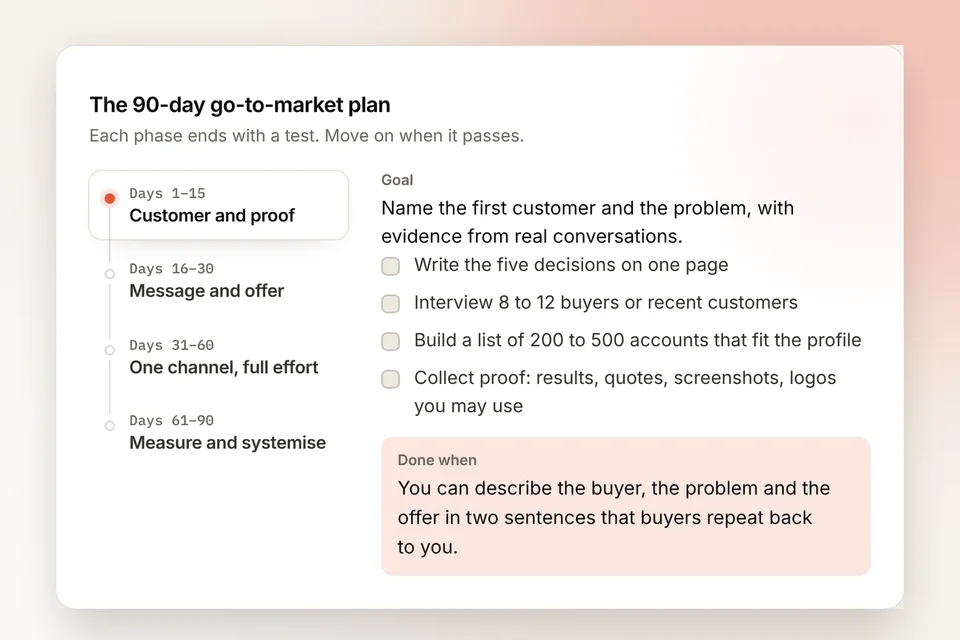
Whichever option you choose, agree on a first term of about 90 days. Write three goals in numbers, such as accounts contacted, meetings held and opportunities created. Review at day 45 and day 90. Ninety days is long enough to run a real test and short enough to change course if the evidence says so.
Plan the move from one option to the next
Most startups use more than one of these in sequence. The common path runs from founder-led work with a consultant, to a delivery partner, to a first hire who takes over a working system.
Plan each handover before it happens. The outgoing partner should leave the playbook, the templates, the data in your CRM and access to every tool. Make those part of the contract from the start, so moving on later costs you nothing.
Ask these four questions before you choose
- What exactly is not working today: the strategy, the execution or the capacity?
- Who will do the hands-on work each week, by name?
- Which numbers will tell us in 90 days whether this was the right choice?
- What do we keep if we stop: the playbook, the data, the accounts and the tools?
If you cannot answer the first question, start with a short consultant project to find out. Hiring execution for a strategy problem is the most expensive way to learn it.
Sources
Questions
Is a fractional CMO cheaper than an agency?
Usually the retainer is lower, but the comparison is uneven. A fractional CMO sets direction and an agency produces work. Many companies end up paying for both, so price the total, not one line.
Can a GTM consultant also run execution?
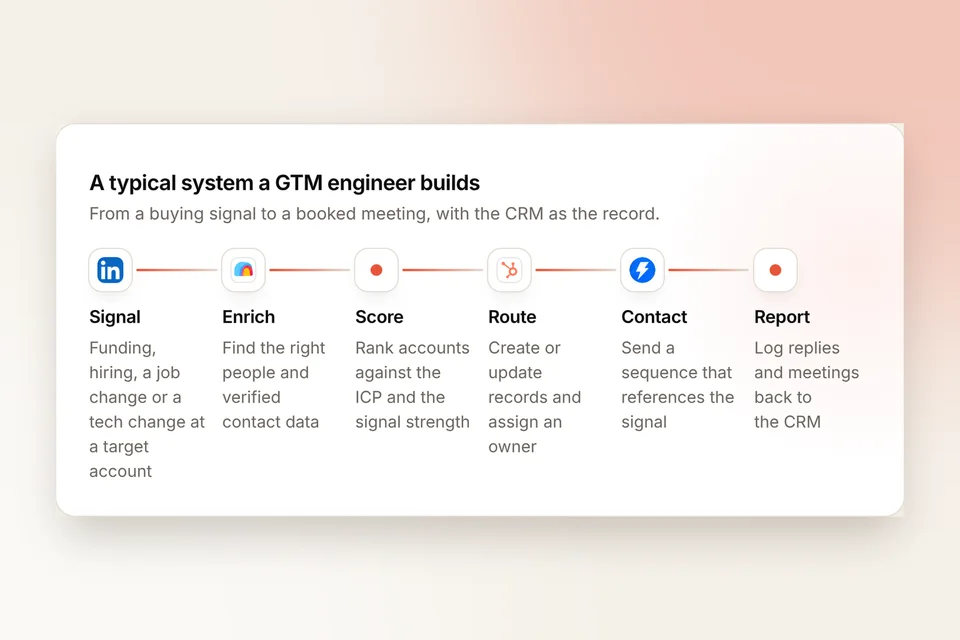
Some can. Ask whether the consultant delivers the campaigns, sequences and reporting, or hands you a plan. Operators who deliver with automation can replace part of an agency.
When should a startup make its first full-time marketing hire?
When the channel that works is clear and there is enough repeatable work to fill a full week. Hiring before that often leaves a generalist guessing at strategy.

Founder of Autoniqo. Runs LinkedIn, outbound and AI search for founder-led B2B teams in the US, UK, EU and the Gulf. 405 projects on Upwork at 100% Job Success.